
Yes, a 3-day road trip in Provence can be both simple, refreshing, and well-balanced, provided you build a coherent itinerary rather than trying to see everything. To fully enjoy a road trip in Provence, the ideal approach is to combine charming villages, typical landscapes, gourmet stops, and heritage sites, with reasonable stages that leave plenty of room for leisurely exploration.
Provence, in the cultural and historical sense, immediately brings to mind hills, shaded squares, markets, vineyard-lined roads, and hilltop villages. If you are looking for an easy-to-follow plan for a short stay, the itinerary below offers three complementary days around the Var and inland Provence, at a pleasant pace for a couple, a family, or travelers passing through.
Why choose a 3-day itinerary in Provence?
Three days are enough to get a feel for the spirit of Provence without constantly rushing. On a short trip, the real challenge is not filling the days, but selecting stops that tell you something about the region: an old village, a panoramic road, a market, a heritage site, a terrace break, or a walk in nature.
Provence is part of the broader Provence-Alpes-Côte d’Azur region, a vast and diverse area. For three days, it is therefore better to avoid overly long cross-country drives. By staying within a relatively small area, you reduce time in the car and gain what really matters: time on site, unexpected discoveries, and the feeling of traveling without rushing.
This type of trip is particularly suitable if you want to:
- see several sides of Provence without changing accommodation multiple times; ;
- alternate heritage, landscapes, and the art of living; ;
- keep your organization flexible, adapted to the season; ;
- plan a realistic program with children as well as for two; ;
- enjoy the back roads and villages rather than the main roads.
Before setting off: the essential principles for a successful road trip
A great itinerary is not only about choosing the places. It also depends on a few practical decisions made beforehand. The first is to accept that in Provence, the pleasure often comes from modest detours: a square, a viewpoint, an alley, a café, a chapel glimpsed in the distance. There is no need to plan an endless list of stops.
Then, always adapt your program to the season. In summer, the villages are livelier but also busier; in spring and autumn, the light is superb and the pace is often more peaceful; in winter, some discoveries remain very enjoyable, especially if you like historic centers and quieter landscapes. You can find general information about the area on the official website of the South Region.
A few simple rules often make all the difference:
- plan for only a few major stops each day; ;
- set out relatively early to enjoy the villages before the crowds arrive; ;
- leave some free time for a break or an unexpected visit; ;
- wear shoes suitable for cobbled lanes and uphill walks; ;
- keep water in the car, especially in warm weather; ;
- check parking and access conditions in historic town centers.
If you prefer relaxed stays, you can also take inspiration from a gentler approach to travel with this article on slow travel in Provence, particularly well suited to a short stay.
Suggested itinerary: day 1, enter Provence through the villages and landscapes of the Var
For this first day, the idea is to immediately immerse yourself in the Provençal atmosphere without going too hard. Start with a village full of character, with its narrow streets, old façades, and slower pace than that of major urban centers. The benefit of this introduction is twofold: you get your bearings and discover right away what makes the region so charming.

Morning: Stroll through an old village
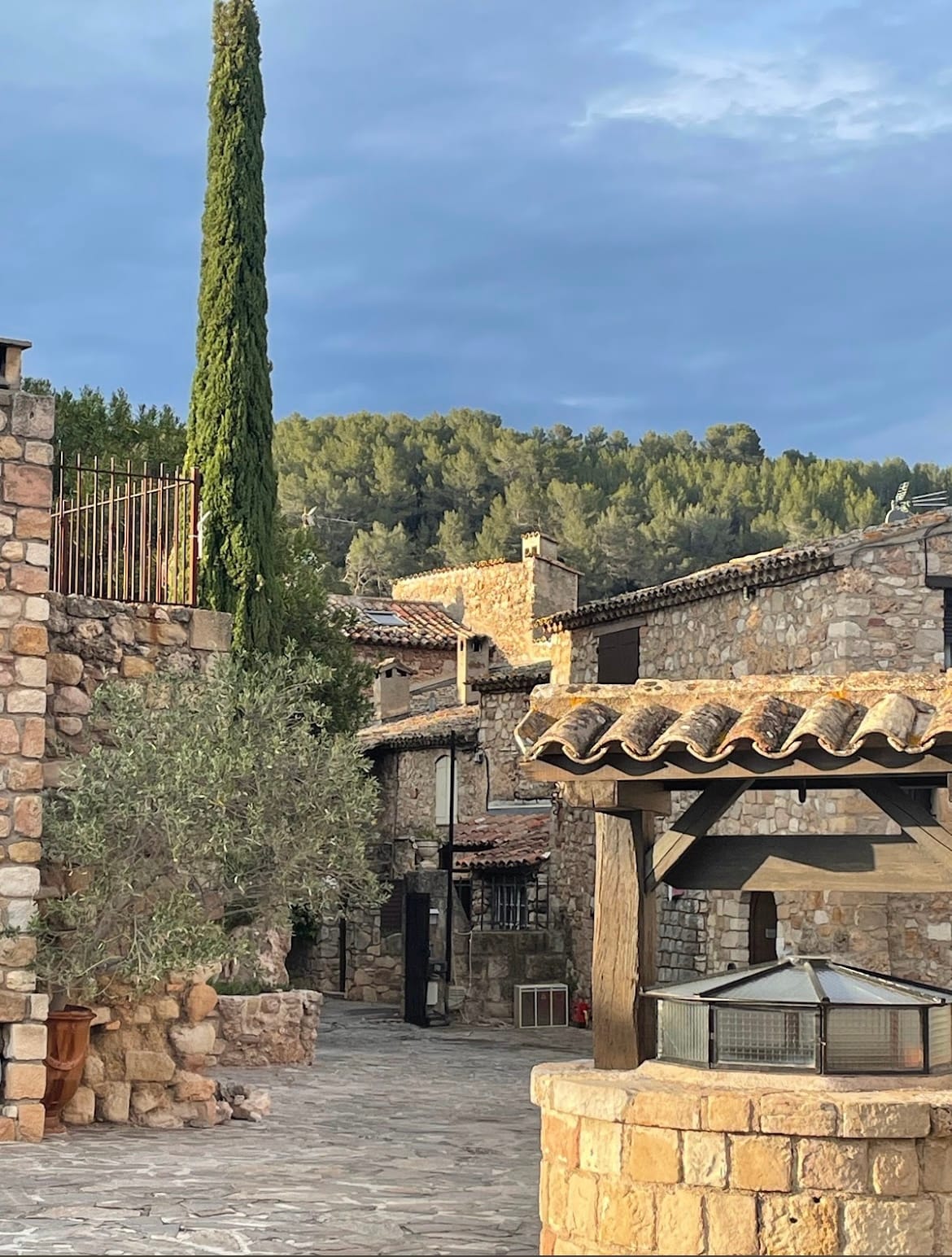
Choose an old town or a hilltop village in the area you are traveling through. Stroll without too strict an objective: medieval gate, small square, fountain, vaulted passageway, panorama over the hills or vineyards. In Provence, the best visits often begin on foot, wandering through the streets. It is also the perfect time for a coffee on a terrace and to observe local life.
If you enjoy this type of atmosphere, you can extend the inspiration with this selection of the most beautiful medieval villages in Provence, useful for choosing your stops according to your preferences.
Noon: simple lunch and a break in the shade
On the first day, keep lunch light and pleasant, without making the stop too long. The idea is not to multiply reservations or journeys, but to settle into the local rhythm. A shaded square, a few local products, or a leisurely meal in an old town center are enough to make the journey enter another dimension of time.
Afternoon: scenic drive and nature stop
After the village, take a secondary road to cross a more open landscape: hills, pine forests, vineyards, Provençal countryside, or gentle terrain, depending on your area. Prefer routes that allow for several brief stops rather than a long, monotonous stretch. A viewpoint, an orientation table, a short path, or a riverside can make an excellent break.
This first day should remain light. It is better to see fewer places and enjoy them fully than to string locations together. If you are staying in Les Arcs-sur-Argens or the surrounding area, this gentle start pairs well with settling into a quiet place at the end of the day, such as Château d’Argens, a hotel and restaurant housed in a 13th-century château.
Day 2: heritage, markets and the Provençal art of living
The second day is often the heart of the trip. It is the ideal time to give more space to heritage and local life. In Provence, heritage is not limited to monuments: it can also be seen in the layout of villages, squares, covered markets, churches, old houses and everyday customs.
Morning: market or historic center
If your schedule allows, start with a market. Even without buying anything, it is one of the best ways to experience Provence: colors, seasonal produce, local accent, aromatic herbs, fruit, soaps, linens, pottery or little finds. If no market is scheduled that day, replace this step with a more in-depth visit to a historic center.
Focus on a few elements:
- the layout of the village or small town; ;
- architectural details visible on the façades; ;
- views from higher ground; ;
- accessible religious or civic buildings; ;
- less-frequented routes behind the main thoroughfares.
Noon: take your time
The risk on a road trip is treating lunch as a mere transition. In Provence, it’s often the opposite: the meal is part of the journey. Take the time to settle in a village or small town, then allow yourself some leeway before getting back on the road. When the days are hot, this pause is precious.
Afternoon: a heritage visit, followed by a leisurely drive
The afternoon can be devoted to a more structured heritage site: historic center, chapel, cloister, ruins, fortifications, a museum connected to the area, or an interpretation site. There’s no need to do too much. A single well-chosen visit adds more depth to the itinerary than a rapid succession of entries and exits.
Then return to the spirit of the road trip: a pleasant drive, a photo stop, a viewpoint, a short walk, a village passed through out of curiosity. It’s this alternation between visiting and slow travel that makes the stay feel alive.
To imagine other combinations of stops in the department, you can browse this article about a coast-to-mountain itinerary in the Var. It can complement this program if you’d like to extend your stay beyond three days.
Day 3: a final day between nature and a characterful village
The third day should avoid two pitfalls: trying to “get the most out of” the last few hours by adding too many stops, or, on the contrary, ending with an unremarkable day. The right formula is to combine an accessible natural discovery with one last village or small town with plenty of character.
Morning option: an easy walk through a typical landscape
Choose a short walk or an easily accessible natural site. The aim is not performance, but a feeling of space: a shaded trail, a panorama over the hills, a waterside setting, a ridge road, or countryside planted with Mediterranean species. An outing of this kind gives the trip greater depth and prevents Provence from being reduced to its villages alone.
The historic Provence stands out precisely for this diversity of atmospheres: inland, coastal, agricultural, mineral, sometimes very gentle, sometimes wilder. In three days, you will not see everything, but you can already experience several of its nuances.
Lunch: choose a pleasant place rather than a must-see spot“
On this last day, favor simplicity. Lunch in a pleasant setting is better than taking a major detour to check an address off your list. On a road trip, a comfortable pace matters just as much as the content of the visits.
Afternoon: finish on a beautiful heritage note
Before setting off, treat yourself to one last stroll through a place with personality: sloping lanes, a discreet little square, a panorama, ruins, workshops, a public garden, or an elevated promenade. This way, you will retain a clear and harmonious impression of the trip.
If you prefer routes that are a little greener and more inland, the article Discovering Green Provence can also give you some good ideas for a more nature-focused alternative.
How to adapt this itinerary to your travel style
A three-day road trip should remain flexible. The same guiding thread can suit very different travelers, provided you adjust the stops.
For a couple
Favor villages at the beginning or end of the day, when the light is softer and the narrow streets are quieter. Reduce the number of “indoor” visits to leave more room for terraces, viewpoints, and spontaneous breaks. A stay like this is best experienced slowly.
For a family
Systematically alternate heritage and time outdoors. Children cope better with historic centers if they are followed by a park, a short walk, or a delicious treat. Keep driving time reasonable between two stops and avoid overly ambitious plans after lunch.
For travelers passing through
If you’re passing through the region without staying long, focus on a single area. It’s better to explore a few nearby villages and landscapes than to spread your efforts across several distant areas. The experience will be clearer, more relaxing, and often much more memorable.
Common mistakes to avoid on a 3-day road trip in Provence
Many short trips become tiring not because of the distances, but because of poorly prioritized interests. Here are the most common mistakes.
- Trying to see everything: Provence isn’t just a list of must-see attractions. Choose a theme and stick to it.
- Underestimating historic town centers: Narrow streets, stairways, cobblestones, and parking sometimes require a little planning.
- Forgetting downtime: Traffic, looking for a parking spot, wanting to linger… all of this is part of the journey.
- Driving during the hottest hours without a break: especially during the warmer months, plan for a gentler pace around midday.
- Relying on too many rigid reservations: a successful road trip leaves room for spontaneous discoveries.
- Overlooking accessibility: some accommodations or historic villages have many stairs and less straightforward access.
This last point is worth taking into account if you are traveling with a stroller, heavy luggage, or specific mobility needs. For example, in Les Arcs-sur-Argens, the Château d’Argens site states that access may be difficult for people with reduced mobility because of the many stairs.
Where to stay to keep your itinerary running smoothly?
For a three-day stay, it is often most practical to sleep in the same place throughout the trip. This way, you avoid repacking your suitcases every morning, changing your bearings, and repeated setup time. This option is particularly enjoyable if you want to explore the Var and Provence at your own pace.
Choose a base centrally located relative to the stops you have selected, with surroundings conducive to relaxing at the end of the day. A place set in a heritage or natural setting often enhances the feeling of disconnecting. In Les Arcs-sur-Argens, an establishment such as Château d’Argens, for example, allows you to stay in an old château, with a restaurant, swimming pool, private spa, and accommodations suited to different types of travelers.
To choose your base wisely, simply ask yourself these questions:
- Would you like to explore the surrounding area without changing hotels?
- Do you prefer to sleep in a village, in the countryside, or in a small town?
- Would you like to prioritize evening tranquility or immediate entertainment?
- Do you need spaces suitable for a family stay?
- Do any members of the group need easy access without stairs?
Frequently asked questions
What is the best itinerary for a 3-day road trip in Provence?
The best itinerary is one that stays focused on a coherent area. For three days, a loop through the Var and inland Provence works very well, balancing historic villages, scenic roads, and heritage stops. The key is to limit long journeys so you can preserve time on site.
Can you take a family road trip in Provence?
Yes, provided you maintain a realistic pace. Alternate village visits with outdoor breaks, scenic viewpoints, or short walks. Children enjoy the trip more when time spent in the car remains moderate and each day retains some free time.
Do all stages need to be booked in advance?
Not necessarily. It’s useful to plan accommodation in advance and, depending on the season, certain meals or visits, but a road trip benefits from staying flexible. Leave yourself some leeway to change the order of stops depending on the weather, how tired you are, or a place you fall in love with along the way.
What is the best season for a road trip in Provence?
Spring and autumn are often very pleasant times to travel at a leisurely pace, with beautiful light and a gentler rhythm. Summer offers a lively, quintessentially Provençal atmosphere, but requires more planning. Winter can be suitable if you prioritize villages, heritage, and quieter stays.
How many steps should you plan per day?
For three days, it’s better to plan only a few major stops. Two highlights each day, complemented by a few short stops, are more than enough. Beyond that, the trip can become too packed and lose its charm.
How can you avoid an overly tiring road trip?
The simplest option is to sleep in the same place for all three days and build short loops around your base. Add breaks in the shade, reduce unnecessary detours, and don’t stack visits to indoor attractions. In Provence, the quality of the stay often depends more on the pace than on the quantity.
Can you discover Provence without going as far as the coast?
Absolutely. Provence is not just about the sea: its villages, hills, vineyards, historic centers, and inland landscapes already offer a very rich experience. For a three-day stay, remaining inland is often an excellent idea to enjoy a more peaceful atmosphere.