


flora and fauna of the Maures
A living massif to explore step by step
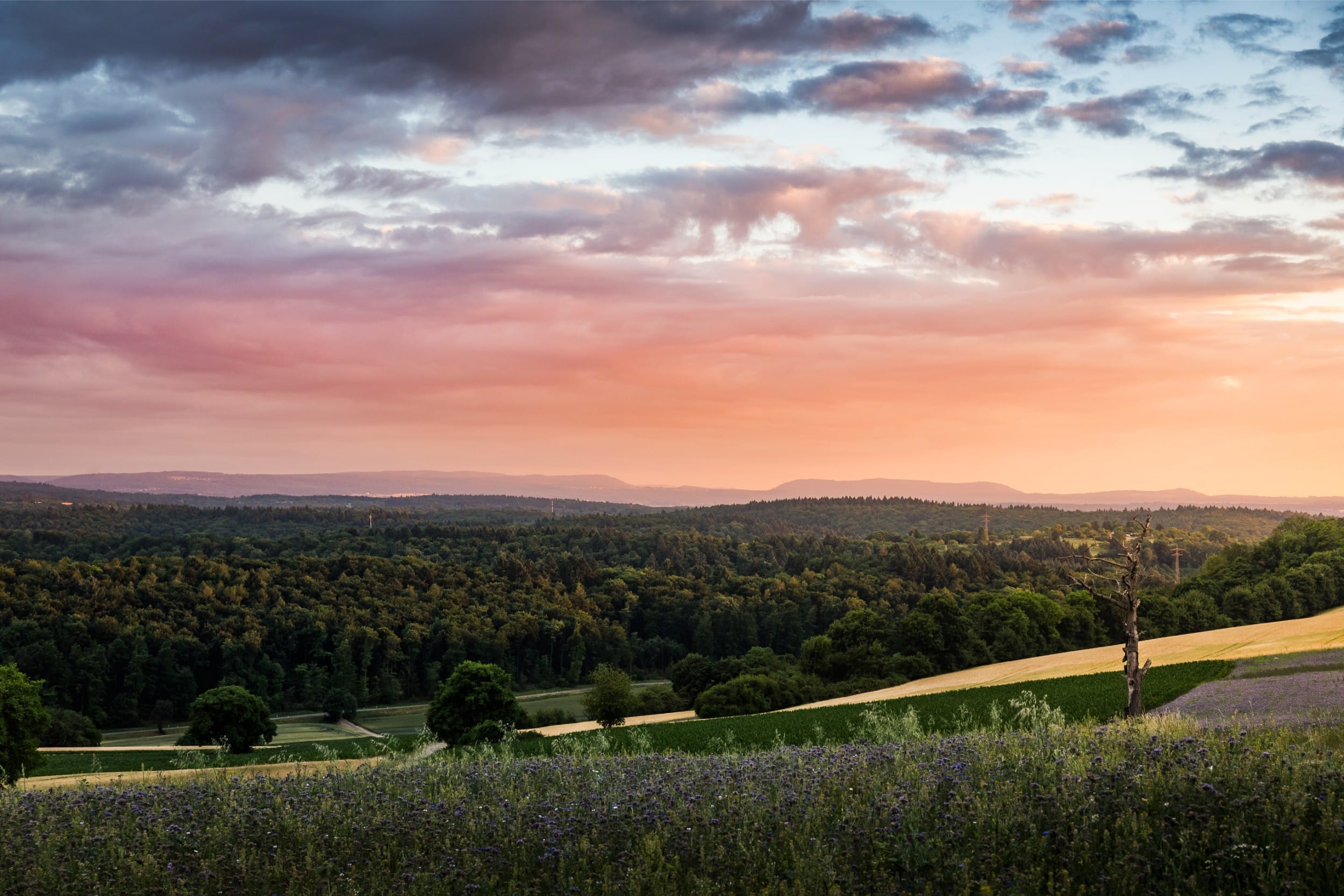
At first glance, the Maures massif reads like a large dark wave lying between the Mediterranean and the Var hinterland. But as soon as you venture in, it reveals a mosaic of habitats: wind-swept ridges, humid valleys where water lingers, dense oak groves, sunny maquis, temporary ponds, and dry grasslands. This diversity of environments explains the biological richness of the site, where plants and animals coexist according to subtle, sometimes fragile, often spectacular balances.
To understand this territory, one must accept to slow down: observe the changes in light, the composition of soils, the presence of a stream, the transition between undergrowth and clearing. The nature of the Maures is not a fixed backdrop: it transforms with the seasons, and even throughout a single day. The scents of resin and cistus rise with the heat, the songs of birds vary with the hour, and the traces of animals fade or appear after rain.
For an overview (landscapes, access, major landmarks), the resource Massif des Maures, Provençal massif - The Var helps to situate the massif in its geographical and natural context.
The emblematic flora: from maquis to deep forests
The vegetation of the Maures is primarily a story of contrast. In the most open areas, the maquis dominates: a dense, sometimes impenetrable formation made up of hardy shrubs adapted to drought and wind. Here you can find cistus (often in bloom in spring), heathers, strawberry trees, myrtles, broom, and lentisks. This hard-leaved vegetation limits evaporation and withstands Mediterranean conditions, while providing shelter and food for a multitude of insects, birds, and small mammals.
As you gain altitude or change exposure, the forest thickens and the atmosphere shifts. Oaks (cork and green) structure part of the massif, with an undergrowth rich in vines, ferns, mosses, or shrubs. In places, pines establish brighter stands, where carpets of needles alter soil life. And in the bottoms of valleys, moisture allows for the establishment of species that require more water: ashes, alders, willows, sometimes plant alignments that signal a discreet watercourse.
The cork oak, a botanical signature and refuge
It is impossible to talk about the Maures without mentioning the cork oak. Its thick, spongy bark is a remarkable adaptation: it partially protects it from fires and climate stress. Cork oak forests also offer cavities, cracks, and micro-habitats used by numerous invertebrates, reptiles, and birds. On the scale of a hike, one quickly notices that this forest is not silent: rustlings, scratches, wing beats, a whole world circulates in the layers.
To delve deeper into the plant and landscape component, one can consult the page The Maures massif, focused on the flora and gardens associated with this territory.
Seasonal blooms: learning to read the natural calendar
The massif can be visited year-round, but it presents itself differently depending on the months. In spring, the floral explosion makes the slopes and clearings particularly rich: cistus and heathers accompany a host of small discreet plants, sometimes endemic or localized, that take advantage of a favorable window before the intense heat. In summer, the palette becomes more subdued: blooms become rarer, and observation shifts towards forms (leaves, bark), fruits (strawberries, berries), and survival strategies (thick leaves, low growth, silver hue).
Need a room? Book directly!
In autumn, fruits and seeds attract another fauna: frugivorous birds, small rodents, wild boars. Finally, winter highlights the structure: silhouettes of trees, carpets of leaves, traces of passages on moist soils. This seasonal cycle makes the Maures fascinating: returning on the same path three months apart often means discovering a different massif.
The fauna: discreet, nocturnal, but very present
The fauna of the Maures is earned. It is not absent; it is cautious. The density of vegetation offers refuges, and many animals prefer the calm hours: dawn, dusk, night. To maximize observation chances, it is better to walk slowly, stop often, and listen before searching visually. The signs are everywhere: footprints in a wet area, remnants of chewed acorns, trails in the scrub, feathers, burrows, and sometimes the sudden silence of birds that signals a passage.
Mammals: tracks, passages, and habits
The wild boar is one of the most well-known inhabitants, notably by the turned-up soil it leaves behind. It shares these environments with the fox, the badger, and various small mammals, some of which remain invisible but are essential in the food chain. Forested areas, edges, and clearings constitute corridors where wildlife moves to feed or reach water points.
For the walker, the challenge is to avoid a brutal encounter: stay on the paths, keep your distance, and above all, do not try to approach. Observing without disturbing also means accepting not to see on every outing and learning to spot signs of presence.
Birds: from song to gliding flight
Birds set the tempo. In scrub areas, species enjoy dense bushes where they find insects and shelter. At the forest edge, repetitive songs, brief alarms, and invisible dialogues can be heard. Above the ridges, large gliders can sometimes be seen taking advantage of updrafts. High points and passes are good places to look up, especially in stable weather when the rising air currents are structured.
A lightweight pair of binoculars changes the experience: it allows for identifying silhouettes, contrasts in plumage, and flight attitudes. But even without equipment, attentive listening is enough to distinguish rhythms: territorial song in spring, greater discretion in summer, agitation during seasonal movements.
Reptiles and amphibians: the masters of micro-habitats
Reptiles appreciate edges and sunny areas where they can thermoregulate: warm stones, slopes, clearings, piles of wood. They are sensitive to disturbance and flee quickly at the slightest vibration. Amphibians, on the other hand, depend on water: temporary ponds, ditches, small wet areas. Certain periods are crucial, especially reproduction, when the slightest disturbance can affect the success of a generation.
Seasonal ponds are discreet treasures: they concentrate astonishing biodiversity, from larvae to aquatic insects, and attract many predators. Observing them imposes a simple rule: do not tread on the banks, do not move anything, do not take anything. Life there is fragile as it relies on very fine balances of water, temperature, and vegetation.
Remarkable environments: the Plaine des Maures, another face of the massif
Beyond the forests and scrub, there are open spaces that completely change the reading of the territory. The Plaine des Maures is one of these unique areas: more horizontal landscapes, particular soils, alternating meadows, wetlands, woodlands, and clearings. This variety of habitats favors specialized, sometimes rare species that need precise conditions to thrive.
To understand the importance of this sector and the protection logic that accompanies it, the dedicated page for the Nature Reserve of the Plaine des Maures offers useful information on objectives, environments, and stakes.
In this type of space, naturalist observation takes on another dimension: you see further, better spot movements, and understand the relationship between low vegetation and ground fauna. Insects are often very present, and with them, a whole chain of interactions: pollination, predation, seed dispersal. A simple clearing can become a miniature theater if you sit still for a few minutes.
Conservation, fires, and restoration: a nature under pressure
The Maures massif is of powerful beauty, but it is also exposed: fires, droughts, human pressure on certain sectors, habitat fragmentation. Fires, in particular, leave lasting marks on landscapes and ecological dynamics. Some plants recover quickly, others more slowly. Wildlife reorganizes: some species benefit from opened environments, while others lose their refuges. It is not just a visual aftermath of a fire: it is a reconstruction that takes years, sometimes decades.
Need a room? Book directly!
Preservation strategies rely on knowledge of environments, species monitoring, and space management. Understanding these actions helps to better accept certain constraints (regulated areas, seasonal restrictions): they are not aimed at limiting the pleasure of visiting but at preserving what makes the massif exceptional.
For insights into forest ecosystems and management/knowledge actions, the resource Plain and Massif des Maures provides an interesting setting.
Observe without disturbing: good practices in the field
Discovering rich nature involves a responsibility: that of reducing your impact. In the Maures, where many species use refuges close to the ground and limited water areas, small gestures matter. Staying on paths avoids trampling plants and limits erosion. Keeping your distance from animals prevents stress and abandonment of the area. Keeping your dog on a leash (where requested or relevant) protects wildlife and avoids unnecessary chases.
Silence is a tool for observation: speak more softly, take breaks, turn off the music. Waste, even biodegradable, has no place: a core can attract animals where it shouldn't, a fruit peel will take time to disappear, and a forgotten tissue quickly becomes a marker of incivility.
Finally, foraging should be avoided: some plants are protected, others play an important role for pollinators or reproduction. Taking a photo, noting a location, returning in another season: this is a richer way to collect memories.
Ideas for routes and key moments to enjoy biodiversity
Without listing specific trails, one can choose outings based on the day's objective. For forest atmospheres, favor valleys and cork oak areas, where the coolness allows for longer animal activity. For panoramas and bird flight, aim for high points and ridges, considering the wind. For insects and flowering, seek sunny clearings and transitions between scrubland and edge, often the richest in diversity.
The best moments are often the simplest: early in the morning, when the heat has not yet set in, or late in the afternoon, when the scents and sounds rise. After rain, the massif changes: colors saturate, tracks appear, certain species emerge. In summer, one must obviously consider risks and restrictions: caution is not optional in a fire-sensitive area.
From the massif to the coast: natural continuities and points of interest
The Maures massif does not live in isolation: it interacts with the coast, urban areas, agricultural valleys, and protected spaces. This continuity is essential for wildlife movement, genetic diversity, and ecosystem resilience. Over the course of a stay, alternating between an inland outing (forests, valleys) and an outing near the coast helps to understand how marine influences (humidity, winds, salinity) modulate vegetation and animal presence.
If you wish to extend the discovery on the side of municipalities and educational developments, the page Natural heritage offers interesting references to connect landscapes, awareness, and observation spaces.
Combining nature, art of living, and seasons: ideas for a balanced stay
Exploring biodiversity sometimes requires organizing your pace: a long hike one day, a gentler outing the next, a moment of recovery to set off attentive again. In winter, the massif offers low light, calmer attendance, and a more graphic reading of landscapes. For ideas on periods and atmospheres, you can read Winter holidays in Var: nature and authenticity.
The Maures are also part of a Provence of terroirs. After a day of observation, extending the experience by discovering estates and wine landscapes allows for a connection between nature and local culture. For this, The rosé wines of Provence to discover estates can provide ideas for getaways.
Need a room? Book directly!
And because attention to nature also comes through the pleasure of the senses, a detour through local products and southern cuisine naturally extends the theme: Gastronomic stay: discover the flavors of the south.
For those who enjoy stepping off the beaten path and favoring more natural approaches, this resource can complement your inspiration: Visit the Côte d’Azur differently: nature getaways.
Finally, recovering after the miles and returning more available for observation is a real plus: Relaxing weekend: the most beautiful spas in Var.
Preparing for your visit: light equipment, safety, and respect for the massif
To fully enjoy the massif, it's better to rely on simple yet suitable equipment: gripping shoes (the ground can be unstable), sufficient water, protection against the sun and wind, and a light layer for temperature variations. A small pair of binoculars and a notebook can quickly turn a walk into a naturalist exploration. If you enjoy identifying species, an offline app or a paper guide can be useful, but observing without naming is already very rich: shapes, colors, behaviors, relationships between plants and insects.
Safety is central: check the weather, respect access rules (especially during fire risk periods), avoid leaving late, and inform a loved one in case of an isolated outing. On the ground, remain humble: heat, long trails, and areas without network can be surprising.
Conclusion: a nature to tame, not to consume
Discovering the fauna and flora of the Maures massif means accepting a part of mystery. One does not collect observations like ticking boxes: one learns a landscape, a season, a scent of undergrowth after the rain, a song heard around a bend in a valley. It is a territory where richness comes from details and transitions, from intertwined environments and discreet species.
By taking the time to observe, respecting the paths and rules of caution, we contribute to the preservation of a living heritage. And the more we return, the more we understand: here, nature is never the same, and that is precisely what makes you want to return.