


Between rocks and green oaks, a string of villages
In the Haut-Var, the approach to a perched village often begins with a turn that opens onto a line of façades blending ochre and stone, clinging to a ridge like a thread. The air smells of pine resin and heated earth, the light outlines the roofs against the sky, and the sounds – a creaking shutter, a murmuring fountain – announce a mineral world shaped by the slope. Here, you climb before arriving, you place your hand on the stone before understanding, and you quench your thirst with views mixed with vines, green oak forests, and distant blues. Discovering the perched villages of the Haut-Var means accepting the slow pace of the roads and the rhythm of the relief, allowing yourself to be guided by the logic of a landscape where each settlement tells a vital strategy, an art of living.The territory stretches between the foothills of the Verdon and the Artuby, the plateaus descending towards Dracénie and the valleys of olive trees of Provence Verte. These villages are not just perched for the beauty of the gesture: they have settled high to watch over, defend themselves, capture the healthier air, keep arable land below, and capture the rare water by retaining every runoff. Their silhouette, from afar, already tells their story: a pointed or square bell tower as a pivot, an enclosure, sometimes a ruined tower, then a ribbon of tiered houses following a rocky ridge. And all around, the mobile edge of crops, the Provençal bocage, the terraced walls that draw fine lines on the slopes.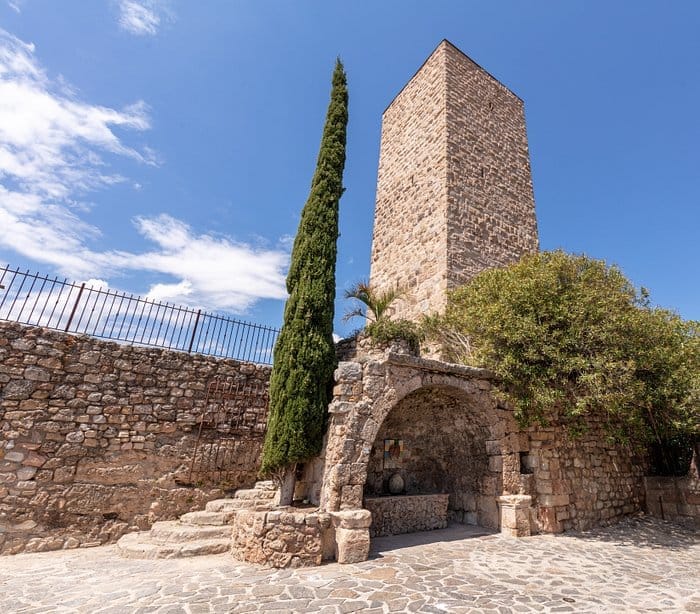
An architecture born from the slope
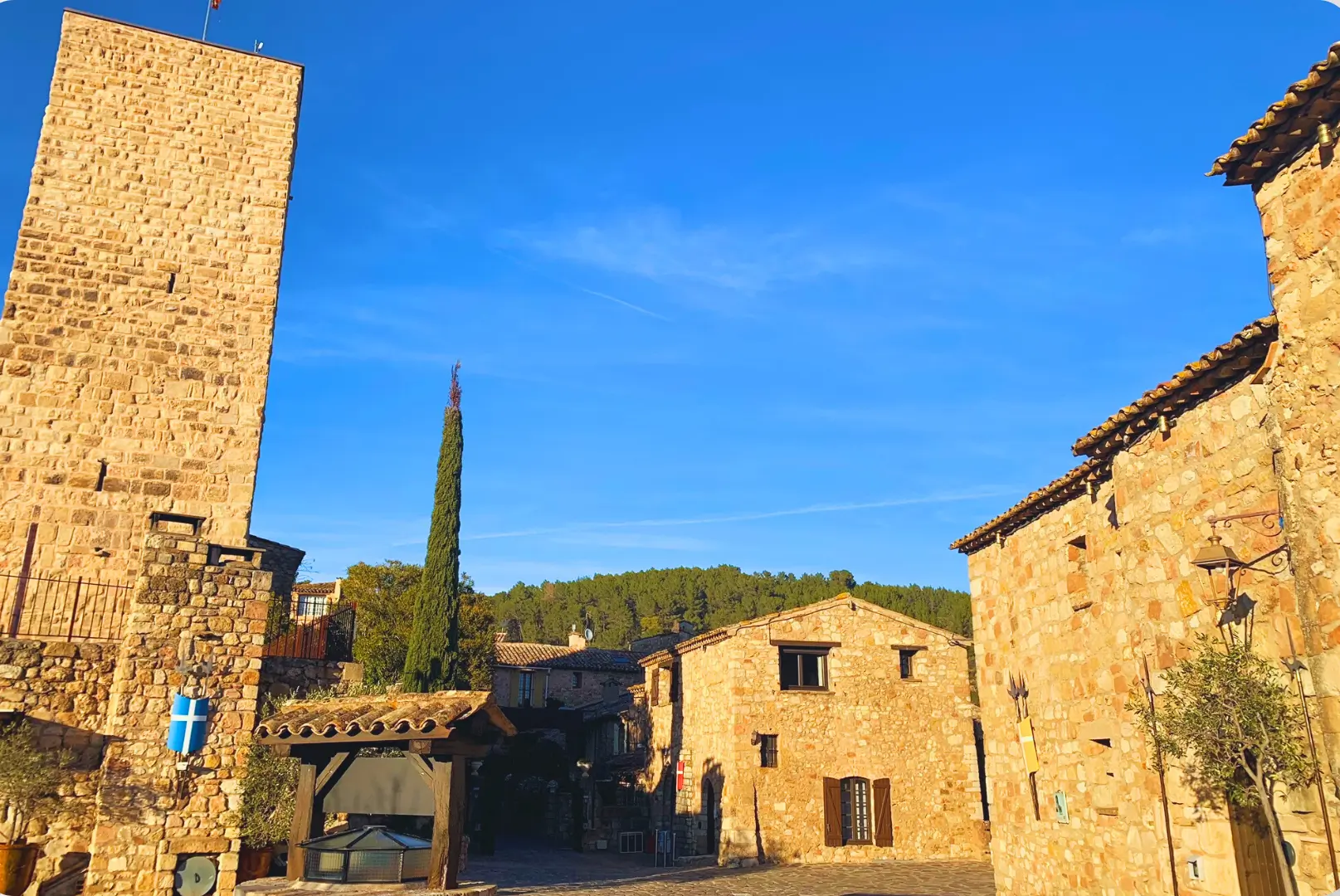
The first lesson of a perched village in the Haut-Var is that stone commands. It dictates the thickness of the walls, the narrowness of the paths, the size of the openings. As you wander through the alleys, you notice how the buildings fit into the rock, how the houses lean on each other, crowned with canal roofs that direct water to cisterns and basins. Entering these streets is like reading geology in urbanism: the slope imposes setbacks, irregular steps, vaulted passages that straddle alleys and connect two levels of the same house. Each threshold has its worn stones, each façade its modest yet tenacious volumes, each lintel its marks of artisans.Everywhere, water is a domesticated treasure. Fountains punctuate public spaces, washhouses shelter under low roofs, stone conduits connect springs to inhabited hearts. In front of some houses, small paved ramps evoke the carts of yesteryear, the transport of harvests, wood, amphorae of oil. On the outskirts, the terraced walls – these dry stone walls – tier the plots, stabilize the land, protect the olive trees from runoff. They draw a cushion of horizontal lines under the built spur, reminding us that agriculture has never been secondary here, even when the village stands like a watchtower.Narrow streets and vaulted passages
The charm of these villages lies as much in the panoramas as in the intimacies. An alley narrows into a corridor, a vaulted passage opens onto a small well, a staircase winds to lead to a paved square where two plane trees cast their shade. These spaces segment the ascent, offer pauses, protect from the wind or sun. The vaults, sometimes in full arch, sometimes in basket handle, connect two houses and form surprising shortcuts. The doors, often dark, are adorned with weathered iron knockers, keys that seem too large for the lock. The smell of laundry, bread, or must clings at certain hours, raising this discreet question: who still lives here, and how does one experience the slope in daily life?Need a room? Book directly!
Book nowSquares and horizons
Each perched village in the Haut-Var has its open-air theater, a square that is not always large, but carries an air of joyful centrality. People play pétanque in the shade, set up the market, greet each other without haste. Often, this square opens onto a belvedere, a wrought iron railing that lets the gaze flow beyond the roofs. There, the relief responds to the architecture: the mass of the hill opposite, the whiteness of a limestone summit, the dark band of a forest, the clear line of a river. In the evening, the villages blaze with a sweet honey; in the morning, the light cuts through, highlights the angles, reveals the joints of the stones. This play of shadows and lights is another heritage, a daily rhythm that softens the rigor of stone.Chronicles of a territory inhabited for millennia
Before being medieval, these inhabited heights were often ancient, sometimes prehistoric. Oppida occupied the eminences; Romanity traced paths in the valley bottoms and left fragments of bridges, tiles, names. Then came the great medieval waves, the need to watch, to fortify, the rise of fortified towns. In several villages, the ramparts have not completely disappeared: a Gothic door, a round tower, a section of curtain wall still speak this language of defense. Romanesque chapels dot the outskirts, often placed on a grassy plateau, covered with brown tiles, narrow naves and simple apses, witnesses of a faith inscribed in the sobriety of stone.Modern times have brought other layers: vast later doors, modest mansions, ceramics framing windows, wrought iron balconies. Centuries of relative peace have altered the heart of the villages, softened the warlike vocation, widened doors to allow taller carts in, added exterior stairs, haylofts. The 19th century saw the countryside empty in fits and starts, before the 20th century reconnected with houses that became second homes, then workshops, galleries, guest rooms. Today, the Haut-Var combines permanence and renewal: old trades revive, new inhabitants take root, and the villages continue to oscillate between slow season and lively season.Useful resources
Unique silhouettes, local identities
One recognizes a perched village by its way of being in the world, and each one in Haut-Var has its signature. On the cold and pure heights, Bargème proudly displays its lordly ruins, the wind circulates freely there, and the view glides towards the Artuby. This perch, one of the highest in the department, embodies mineral rigor, the dialogue between the sky and the blonde stones. Further north of Verdon, Trigance hugs its houses at the foot of a renovated castle; the whole resembles a stone ship, anchored in a bend of the valley where the river carves meanders. The medieval enclosure has shaped narrow streets, a fabric that unfolds in levels, with terraces suddenly opening onto the azure.Further south, Tourtour deserves its nickname of village in the sky. The buildings embrace a round hill, the small squares in line create a promenade of shade and light, and the perspectives widen in all directions. Springs and fountains abound, bubbling at the foot of the plane trees and in the courtyards. Workshops and galleries have taken over the ground floors, but the noise remains soft and the vertical momentum modest, almost dancing. Not far away, Villecroze hangs its houses on the slopes and opens its gardens towards a rocky wall pierced with troglodytic cavities; the water that springs and flows has given rise to a cool, almost secret park that contrasts with the rock. Freshness here becomes a luxury that rises from the stones and leaves.On the side of the gorges of the Nartuby, Châteaudouble stretches along a ridge, with terraces suspended above a dizzying drop. The feeling of altitude is immediate, almost alpine, despite the scent of scrubland. A few turns away, Ampus opens to the wind, perched between two valleys, deploying its cobbled streets towards a church that watches over. Comps-sur-Artuby already announces the austere plateaus leading to the entrance of the great canyon of Verdon; this tight-knit village above the river is a natural starting point to explore the edges and feel the breath of wide open spaces.Need a room? Book directly!
Book nowThe taste of Haut-Var: markets, cuisine, and wines
Discovering the perched villages through taste is to let one’s steps follow the aromas. In some squares, early in the morning, the air fills with the scents of bread coming out of the oven, freshly pressed olive oil, and scrubland herbs that a vendor crushes to let breathe. The stalls offer sun-soaked vegetables, black or green olive tapenades, fragrant terrines, and goat cheeses aged in the cool cellars of old houses. When the season comes, truffles darken conversations and omelets; one can sense it by the way glances scrutinize the baskets, by how the dogs watch their masters.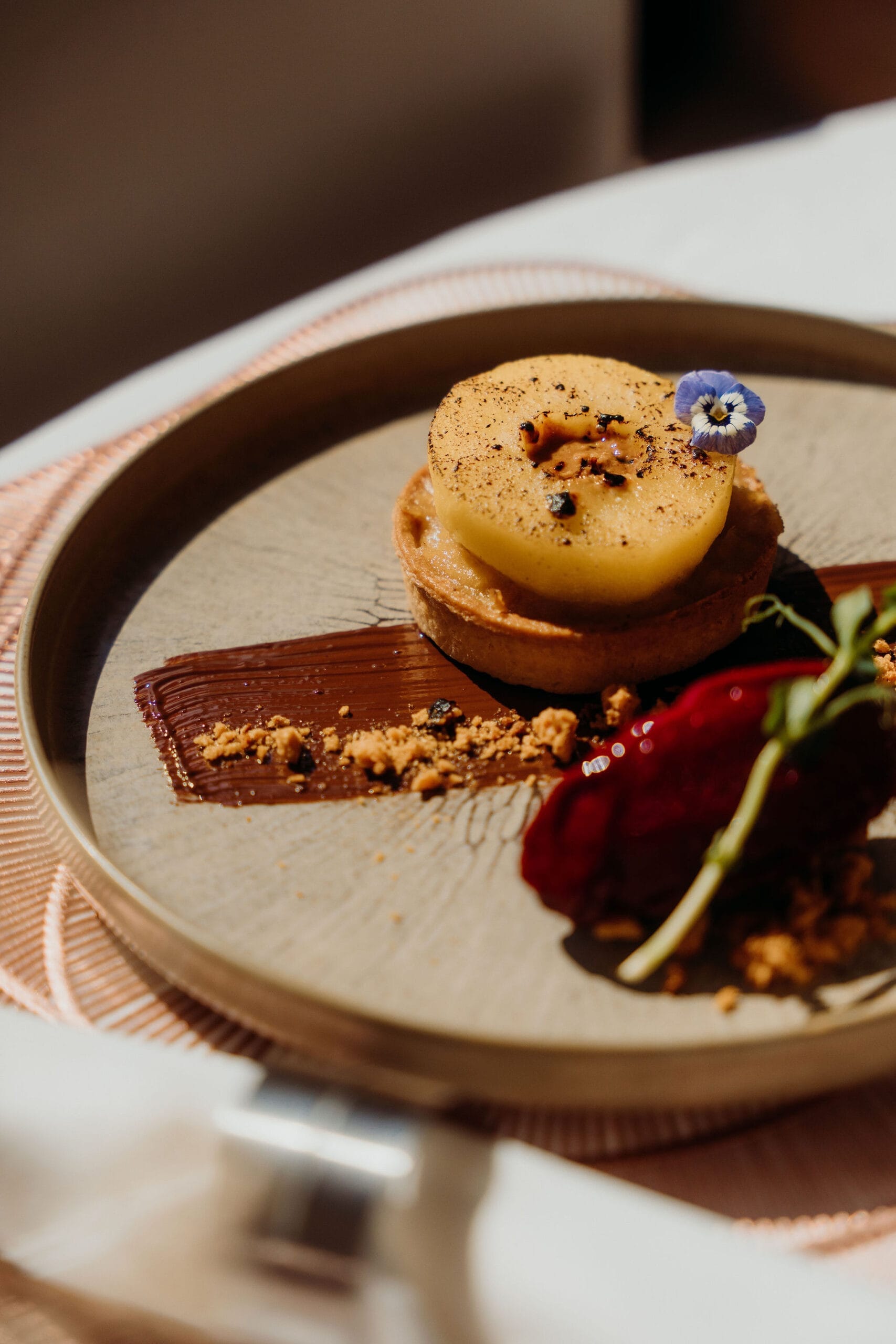 The wine here has two faces. The rosés, with a saline freshness, effortlessly accompany picholines and midday salads; the reds, more confidential, invite pairings with stews, lamb from the plateaus, and confit vegetables. Neighboring appellations intersect, Coteaux Varois en Provence and Côtes de Provence, and one tastes the variety of terroirs depending on whether the vines plunge towards the cool valleys or settle on stony plateaus. Domestic cuisine remains simple, attentive to products and seasons: rustic vegetable soups in winter, tians and grilled dishes in summer, fig jams at the end of summer, mushrooms and chestnuts when the light fades.
Walking from village to village
The best way to enter the intimacy of the perched villages of Haut-Var is to connect them on foot. The marked paths descend towards the rivers, delve into the pine forests, rise through terraces planted with olive trees, to reach a medieval door, a rampart path turned into a promenade. One walks on very ancient traces, those of shepherds, peddlers, farmers, and one quickly understands the position of the villages through the body, through effort. The links between towns then take on another obviousness: such a valley serves as a corridor, such a pass as a crossing, such a rocky bar as a natural border.Beautiful loops connect the outskirts of the Verdon gorges to their foothills: from the top of a spur, one sees the outline of the cliffs before the path plunges towards a stone bridge or runs along a shaded ledge. In the vicinity of more modest rivers, the Nartuby, the Artuby, the paths open onto footbridges, ruined mills, banks where oleanders burst into bloom in summer. Between Tourtour, Villecroze, Salernes, and Aups, a mosaic of paths allows for a few days of wandering, where one sleeps in a village inn, where one has coffee early, before the sun begins to vibrate in the leaves.Seasons and lights
The perched villages change their face according to the seasons. In winter, the clear and cold air stretches distances, snow can dust the distant peaks, the squares resonate with emptiness, and one listens better to the murmur of the fountains. In spring, cherry and almond blossoms whiten the edges of the paths, lush grasses invade the terraces, and shade becomes a commodity again. In summer, despite the heat, the narrow alleys offer corridors of freshness; late afternoons awaken conversations, terraces, and games of pétanque. In autumn, the amber light lays a varnish on the stones, markets are colored with squashes and mushrooms, and the grape harvests rhythm the valleys. Depending on the hour, the same alley displays a different mood, and the same panorama, a new depth.Need a room? Book directly!
Book nowArtisans, workshops, and know-how
The slope has never hindered work; it has even inspired trades. In the villages of Haut-Var and their nearby surroundings, workshops converse with the stones: turning olive wood with tight grains, fine ironwork for railings and knockers, ceramics that extend the regional tradition of terracotta tiles and slabs. The neighborhood of Salernes has left lasting marks in the minds, as the roads have long seen the circulation of terracotta shipments. In the streets of Tourtour, Cotignac, and Aups, small galleries showcase paintings, watercolors, and decorative objects inspired by the surrounding landscapes. One encounters artisans who have chosen to settle high up for the quality of light, the proximity to nature, and the human connection of a village where people greet each other by their first names.These crafts are reflected in the details of daily life: a stone bench softened by use, a forged grille in arabesque that captures the light, a terracotta jar where succulent plants take root. The attentive visitor spots the marks, the discreet signatures, the workshops open a few hours a day, and understands that the economy of the perched villages is not limited to tourism or nostalgia, but to a fine articulation of ancient gestures and contemporary initiatives.Hidden water, fountains, washhouses, and waterfalls
One does not perch by chance in a land of capricious water. Haut-Var has a delicate art of collection and redistribution, which is evident in its fountains, basins, covered washhouses, and channels. Every spring finds a use: refreshing a small square, watering livestock, supplying a garden below. Discreet stone eyes open onto underground channels; engraved plaques tell of recent restorations and ancient collections. Water, rare, hides in the folds of the land and sometimes resurfaces beautifully, as in Sillans where the waterfall reveals a green and blue world, a hole in the mineral sheet, a promise of coolness in the height of summer. In Villecroze, caves and gardens compose another aquatic scene, more secretive, more horizontal, where the channels whisper in the shadows. This economy of water explains the density of certain plantations: tightly packed olive trees on terraces, vegetable gardens nestled against a wall that retains heat at night and moisture during the day, trellises that shade the facades. In the old villages, the washhouses remind us of the time when female sociability was woven around repeated gestures, when women chatted while beating laundry, keeping an eye on the children playing nearby. The fountains still serve as sound frescoes, so much so that one lingers there without thinking, if only to let the ear savor a bit of water in a land that does not provide it excessively.