


Around Arcs-sur-Argens, the paths intertwine between alluvial plains, the Maures hills, and more abrupt red-tinged reliefs towards Roquebrune. The hikes here have that taste of inner Provence, where one moves from a cork oak underbrush to a terrace of olive trees, from a cool riverbank to a viewpoint swept by the mistral. The routes offer panoramas over the Argens valley, glimpses of the Estérel, and discreet encounters with wildlife, from the kingfisher above a river arm to the Hermann's tortoise basking in the sun in the Plaine des Maures. The diversity of atmospheres enriches the area, and several characterful loops mark a territory that can be explored at a contemplative pace or at the rhythm of great escapes at the end of winter or autumn.
 The stated goal of this walk is often the Sainte-Roseline chapel, nestled in a renowned estate, where sacred art and viticulture respond to each other in a harmonious setting. The pedestrian access via agricultural paths gives a sense of tranquil wandering, away from the roads, and allows one to cross islets of garrigue where the strawberry tree coexists with clumps of cistus and tree heathers. At the calmest hours, one sometimes crosses the discreet flight of the hoopoe and the song of the warblers from the hedges.
The loop, modifiable, can return along the bank of the Argens, when water levels permit, to capture the freshness of the poplar groves and observe, in the meanders, herons and egrets in search of fish. The return to Parage, through narrow alleys, completes a hike that is both heritage and landscape, setting the tone for this territory where nature and culture coexist intimately.
Movement in the reserve requires respect and anticipation. Access may be regulated in summer and autumn depending on the fire risk level, and some areas have experienced recent fires: it is advisable to inquire about the currently open sectors. Staying on marked paths is not just a guideline; it is the condition for sustainable coexistence between walkers and biodiversity. In return, the experience is striking: an immersion in a rare landscape, where the mineral, the plant, and water compose a luminous triptych.
The stated goal of this walk is often the Sainte-Roseline chapel, nestled in a renowned estate, where sacred art and viticulture respond to each other in a harmonious setting. The pedestrian access via agricultural paths gives a sense of tranquil wandering, away from the roads, and allows one to cross islets of garrigue where the strawberry tree coexists with clumps of cistus and tree heathers. At the calmest hours, one sometimes crosses the discreet flight of the hoopoe and the song of the warblers from the hedges.
The loop, modifiable, can return along the bank of the Argens, when water levels permit, to capture the freshness of the poplar groves and observe, in the meanders, herons and egrets in search of fish. The return to Parage, through narrow alleys, completes a hike that is both heritage and landscape, setting the tone for this territory where nature and culture coexist intimately.
Movement in the reserve requires respect and anticipation. Access may be regulated in summer and autumn depending on the fire risk level, and some areas have experienced recent fires: it is advisable to inquire about the currently open sectors. Staying on marked paths is not just a guideline; it is the condition for sustainable coexistence between walkers and biodiversity. In return, the experience is striking: an immersion in a rare landscape, where the mineral, the plant, and water compose a luminous triptych.
 By winding around fields and plots, the hike recalls the mosaic of uses of this territory. Respect for crops and properties, attention to fences and farm dogs: a few simple gestures are enough to keep the pleasure of walking intact and maintain a peaceful relationship with the locals.
 It is advisable to inquire about the condition of the paths after heavy floods, frequent in autumn and winter. The river knows how to remind us that it is alive; this also explains the richness of its fauna and flora. In all seasons, walking along the Argens develops another temporality, conducive to contemplation.
 The region is sensitive to fire risk. From June to September, access to the massifs may be regulated daily; consulting the dedicated departmental map before leaving is a useful reflex. Staying on the trails, not smoking, forgoing picnics with fire, and closing gates encountered on the paths: these are simple gestures that preserve the places. Regarding orientation, local markings alternate between country marks, PR, and, on certain connections, segments of GR; a reliable map or track remains a valuable ally, especially when paths cross in the underbrush.
Finally, thinking about the living beings around us changes the way we walk. Hermann's tortoises, in the Plaine des Maures, move slowly and sometimes blend in with the stones; dogs must stay at heel. Riparian birds nest low in spring: one avoids entering the thickets. The red rocks of the Rock and the Blavet heat up quickly; a simple nap in the shade at midday is part of the art of hiking here. All these small attentions, when combined, create a respectful and sustainable practice.
The region is sensitive to fire risk. From June to September, access to the massifs may be regulated daily; consulting the dedicated departmental map before leaving is a useful reflex. Staying on the trails, not smoking, forgoing picnics with fire, and closing gates encountered on the paths: these are simple gestures that preserve the places. Regarding orientation, local markings alternate between country marks, PR, and, on certain connections, segments of GR; a reliable map or track remains a valuable ally, especially when paths cross in the underbrush.
Finally, thinking about the living beings around us changes the way we walk. Hermann's tortoises, in the Plaine des Maures, move slowly and sometimes blend in with the stones; dogs must stay at heel. Riparian birds nest low in spring: one avoids entering the thickets. The red rocks of the Rock and the Blavet heat up quickly; a simple nap in the shade at midday is part of the art of hiking here. All these small attentions, when combined, create a respectful and sustainable practice.
From the Parage of Arcs to the vineyards of Sainte-Roseline
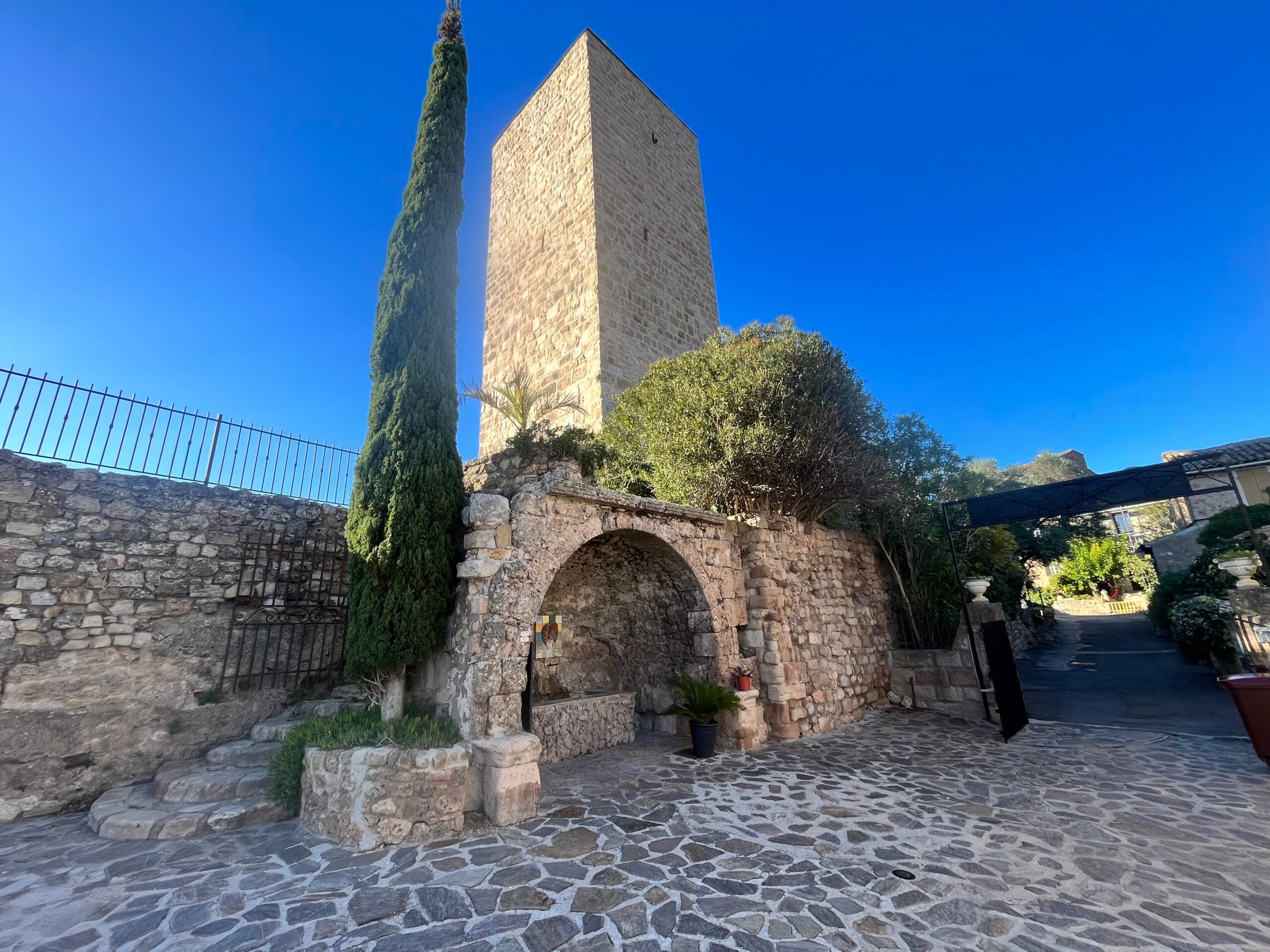
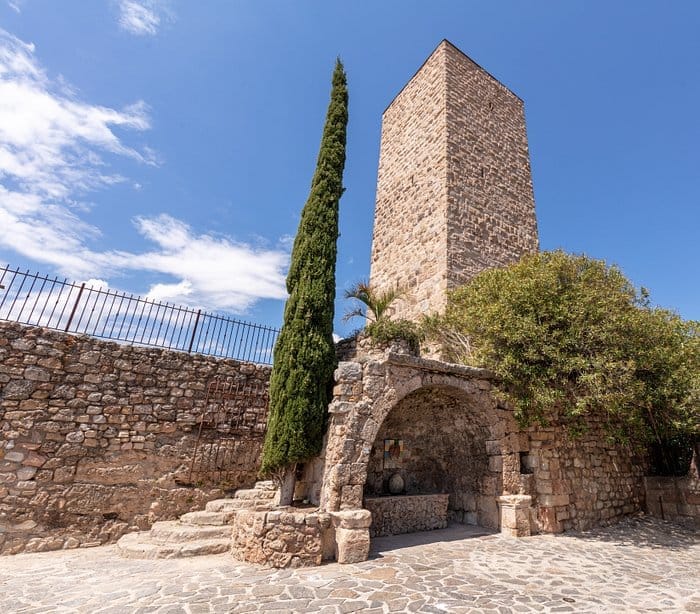
From the medieval heart of Arcs, the Parage district, one escapes through old cobbled paths that lead to terraces planted with olive trees and cypress avenues. Here, the light-colored stone captures the light, and the past surfaces at every corner of the wall. The slope softens at the contact with the vineyard plain, and soon one joins rural paths bordered by low walls, punctuated by small oratories. The horizon opens onto the Argens valley, the village steeple remains in the background, and the progression between the rows of vines offers a changing spectacle according to the seasons, from the green transparency of spring to the golds of autumn.
The stated goal of this walk is often the Sainte-Roseline chapel, nestled in a renowned estate, where sacred art and viticulture respond to each other in a harmonious setting. The pedestrian access via agricultural paths gives a sense of tranquil wandering, away from the roads, and allows one to cross islets of garrigue where the strawberry tree coexists with clumps of cistus and tree heathers. At the calmest hours, one sometimes crosses the discreet flight of the hoopoe and the song of the warblers from the hedges.
The loop, modifiable, can return along the bank of the Argens, when water levels permit, to capture the freshness of the poplar groves and observe, in the meanders, herons and egrets in search of fish. The return to Parage, through narrow alleys, completes a hike that is both heritage and landscape, setting the tone for this territory where nature and culture coexist intimately.
Plaine des Maures and lake of Escarcets
To the south of Arcs, the Plaine des Maures unfolds a unique setting in metropolitan France, often described as a Provençal savanna. Wide sandstone slabs, temporary ponds, umbrella pines nurturing their round shade, and cork oaks with cracked trunks compose a landscape of strong identity. The path leading to the lake of Escarcets and its wooden walkways plunges into this distinct world, where one walks close to a ground sometimes dotted with lichens and asphodels, with the clattering of cicadas as a metronome on fine days. Attentive hikers quickly discover the ecological signature of the place: heathers and cistus mingle with immortelle, the aroma of strawberry tree bursts in late autumn, and one keeps an eye on the ground to avoid disturbing the Hermann's tortoise, an emblematic and protected species. The ponds, after rain, attract dragonflies and amphibians, painting the plain with changing reflections. On the small hills, the gaze embraces, in clear weather, the alignment of the Maures to the west and, to the north, the succession of hills that close the horizon of Dracénie.Need a room? Book directly!
Book nowRocher de Roquebrune and panorama of the Three Crosses
The Rocher de Roquebrune, just steps from the Argens valley, projects its red slabs into the sky, eroded by winds and time. This natural fortress attracts hikers who appreciate strong characters. The departure is from the foothills, amidst pines and green oaks; very quickly, the path tackles the stony slopes to reach the ridge, where the space suddenly opens up. The colors intensify as one climbs: red of rhyolite, deep green of the forest, blue of the sky, and sometimes, a milky veil over the distant sea. The final section towards the Three Crosses is the most spectacular. Some passages require the use of hands, the route skirts ledges and finally arrives at the place marked by white crosses embedded in the rock. The reward is a wide panorama: to the north, the valley of the Argens and the string of villages; to the east, the Estérel and its sister rocks; to the west, the edge of the Maures. On mistral days, the perspectives are cut like with a knife, but the breeze can be strong on the ridge; one then appreciates a light jacket, even in the interseason. One descends by a loop that weaves through the garrigue, crosses blocks of fantastic shapes, and finds the long shadows of pines in the late afternoon. This hike, more athletic than the others, requires a sure foot and favorable weather. Nevertheless, it remains a must to grasp the geology and light that sculpt the land of Arcs.
Useful resources
Gorges de Pennafort and suspended chapel
To the northeast of Les Arcs, the gorges of Pennafort carve the limestone plateau into a cool and secret corridor. The stream of l’Endre makes its way through reddish walls, and the path alternates between the banks with the rhythm of footbridges or stone crossings. The sound of water accompanies the walk, delightfully contrasting with the warm plains of summer; in spring, the vegetation bursts forth in vivid green, while autumn lays down late golds. A highlight of the route is the chapel of Pennafort, perched on a height, almost clinging to the cliff. The building, accessible by a small cliff, invites a contemplative pause. From up there, one perceives the winding gorges, the patches of water sparkling in the sun, and the nearby relief where woods and clearings intertwine. The walls sometimes welcome the flight of a bird of prey, and one can guess, sheltered by mosses, a discreet life of orchids throughout the season. The terrain, while not difficult, can be slippery if the river has swollen; one should avoid the days following heavy rains. During warm periods, shade prevails and makes the progression very pleasant. It is an ideal hike for those who want to alternate viewpoints and intimate atmospheres, without too much elevation but with a sense of travel, as the scenery changes in just a few steps.Taradeau, the tower of Taradel and the valley of Florièye
On the side of Taradeau, an immediate neighbor of Les Arcs, a route charms with its simplicity and balance between nature and history. The ascent to the tower of Taradel, a medieval sentinel perched on a hill, offers a splendid viewpoint over the Argens and the hills covered with vines and groves. The thick walls of the tower recall the lookout function it once served, and the nearby ancient oppidum hints at the long history of occupation of the area. The descent through the valley of Florièye then plunges into a more intimate setting. The path runs alongside the watercourse, under the foliage, crosses some mossy walls, and joins more open passages where the scent of resin takes over. In spring, tufts of butterfly lavender create purple bursts on the slopes, while the breeze carries the scents of cistus and gorse. The contrast between the clear views from the tower and the freshness of the valley creates a varied, accessible, and delightful loop at any time of the year.Need a room? Book directly!
Book nowTrans-en-Provence and the suspended steps of the Nartuby
In Trans-en-Provence, the Nartuby river has sculpted basins and waterfalls in the heart of the village. A pedestrian path has been created as close as possible to the banks and walls, allowing for leisurely strolls on footbridges, along walls that still bear the memory of the old tanneries, and to observe the Saut du Capelan, a graceful waterfall that changes its face depending on the flow. This open-air urban stroll combines heritage, freshness, and poetry. The interest is not limited to the center. Upstream and downstream, sections of the path wind through a green setting, between plane trees, ashes, and willows, welcoming a varied birdlife. The contrast between the roar of the waterfall and the murmur of calmer areas gives the impression of traversing a small human-sized canyon. At the end of winter, when the water is clear and the sun low, the light chisels the spray; in summer, the shade cast by the trees makes this ribbon a tempered alternative to the long tracks of the hills. This hike lends itself to contemplative pauses as well as discoveries of details: a stone structure covered in ivy, a glance at the inaccessible bank, a dragonfly perched at the edge of a slow current. It happily complements the wilder routes of the Maures and reminds us that around Les Arcs, even the towns offer steps into nature within reach.
Gorges of Blavet and the red chaos of the inner Estérel
Further east, the gorges of Blavet tear through the western edge of the Estérel in a series of corridors and spurs where red predominates. The path clings to the slopes, curves around rocky bastions, and plunges into shaded thalwegs where filariae and green oaks flourish. The walls, sometimes austere, tell of a volcanic past and offer, at the bend of a curve, viewpoints over the neighboring peaks, the valley, and even the sea on clear days. Walking in Blavet means accepting a few technical steps here and there, nothing difficult but enough to feel the presence of the rock. The underbrush diffuses the scent of myrtle and rosemary, and the dry tongue of lichens borders the trunks. Hidden from view, the cavities serve as a refuge for some bats; above, the birds of prey take advantage of the updrafts. The atmosphere becomes wilder as one delves deeper, and the return loop, via a sunlit ridge, relaxes the legs while keeping an eye on the glowing cliffs. This hike has the scent of wide-open spaces while remaining close to the valley's axes. It is particularly enjoyable in winter and spring, when the low light enhances the hues of the Estérel and the heat does not yet overwhelm the paths.Banks of the Argens between Les Arcs and Vidauban
Returning to the plain means reconnecting with the softness of the banks of the Argens. Between Les Arcs and Vidauban, a network of rural paths allows for routes as close as possible to the river, punctuated by passages under willows and open crossings where one cuts through islands of vines. The river unfolds its meanders, sometimes slow and reflective, sometimes lively as it approaches pebble zones. Depending on the season, one might catch a glimpse of the blue silhouette of a kingfisher, the formation flights of cattle egrets, and the rings of fish hunting beneath the surface. In the heart of summer, the contrast between the humid shade of the riparian forests and the brightness of the vineyard plots makes for a rhythmic progression. In spring, the palette of greens is impressive; in autumn, the vine in fiery foliage harmonizes with the cozy light for photographic ends of the day. These easy plain hikes invite one to rediscover the Argens as the backbone of the territory, away from the roads, in a space shared with farmers, fishermen, and water birds.Need a room? Book directly!
Book nowRidges, trails, and clearings on the first foothills of the Maures
To the south and southwest of the valley, the forest tracks and ridge paths of the Maures offer sequences with ever-changing horizons. The former communal defenses, where wood cutting was once limited, now provide a network of paths covered in ochre sand, dotted with quartz shards, winding between cork oaks, strawberry trees, and maritime pines. One walks on a soft ground, cushioned by humus, with the sensation of being engulfed in a green sea, interrupted only occasionally by promontories. Climbing a ridge, leaving the path for a discreet single track, emerging onto a flat area where one can see the Argens flowing westward: hiking here takes on the feel of wandering. On mistral days, the dry and clear air sharpens perspectives; with an east wind, clouds contour the reliefs and create a theater of moving shadows on the slabs and treetops. On the ground, the traces of wild boars tell of an intense nocturnal life, and at the turn of a clearing, the carpet of blooming heather adds a pink accent to the decor. These hill hikes lend themselves to customizable formats, from a short two-hour tour to a more ambitious loop for the day. They compose another facet of Les Arcs and its surroundings, more confidential, less spectacular than the gorges or the Rock, but of incomparable fidelity for those who love the regular rhythm of walking.Tips and seasons to make the most of the trails around Les Arcs
The success of a hike often depends on the meeting between a route and a season. Around Les Arcs, winter and early spring offer sharp light, ideal temperatures, and a vegetation in full awakening. The blooming of cistus and asphodels, the air filled with scents of resin and wet earth, the transparency of the waters in the gorges: everything conspires to make these months a privileged moment. Autumn, when the vines turn red and the still warm sea reflects a measured heat, brings similar conditions. Summer requires more precautions, with early morning departures, avoiding the most exposed sections, and ensuring sufficient water supply.
The region is sensitive to fire risk. From June to September, access to the massifs may be regulated daily; consulting the dedicated departmental map before leaving is a useful reflex. Staying on the trails, not smoking, forgoing picnics with fire, and closing gates encountered on the paths: these are simple gestures that preserve the places. Regarding orientation, local markings alternate between country marks, PR, and, on certain connections, segments of GR; a reliable map or track remains a valuable ally, especially when paths cross in the underbrush.
Finally, thinking about the living beings around us changes the way we walk. Hermann's tortoises, in the Plaine des Maures, move slowly and sometimes blend in with the stones; dogs must stay at heel. Riparian birds nest low in spring: one avoids entering the thickets. The red rocks of the Rock and the Blavet heat up quickly; a simple nap in the shade at midday is part of the art of hiking here. All these small attentions, when combined, create a respectful and sustainable practice.