


medieval villages of Provence
A Provence of stone and light: itinerary among the perched villages
You just need to leave the main roads for Provence to change its rhythm. The road narrows, the cypress trees align, the garrigue scents the air, and suddenly a rocky spur appears: at the top, a village surrounded by ramparts, tightly clustered around a church, a castle, or a tiny square. Here, aesthetics are never decorative: they are born out of necessity. To protect, to watch over the valley, to conserve water, to maintain freshness, to build with stones found on site. The result is spectacular: cobbled alleys, vaulted passages, fortified doors, tall adjoining houses, irregular stairs, discreet fountains, breathtaking panoramas.
In this article, we focus on some of the most beautiful medieval ensembles of Provence (and its natural margins: Luberon, Alpes-de-Haute-Provence, Var, Verdon). The goal: to provide you with precise images, atmospheres, ideas for walks, and moments to prioritize, rather than a cold list. To extend the inspiration, you can also consult this external guide on the medieval villages of the Provençal hinterland to discover, very useful for spotting other stops in the Var interior.
Gordes: the mineral theater of Luberon
In Gordes, everything is a matter of relief and material. The village unfolds like a flow of blonde stone on a promontory, with facades that capture the sun and reflect it in soft bursts, especially in the late afternoon. The ancient heart is organized around a massive castle and a maze of alleys that rise and fall unexpectedly. Every angle offers a perspective: an archway, a staircase, a small square, a window framed by ivy. Below, the Luberon countryside stretches its terraced fields, olive groves, and fields, up to the bluish lines of the mountains.
To appreciate Gordes, the best instinct is to get lost on foot early in the morning, when the cobblestones are still fresh and the shops are slowly opening. The cobbled paths require good shoes, but the walk is a constant reward. If you enjoy understanding architecture, observe how the houses lean against each other: in the Middle Ages, density was part of defense, but it also created a microclimate, preserving coolness in summer.
Roussillon: ochre alleys and memory of the lands
Change of palette in Roussillon: here, the stone is tinged with ochre and rust. The village seems painted, but it is the cliffs and nearby quarries that have dictated the color. You walk through streets lined with brick red, saffron yellow, burnt orange facades, sometimes enhanced with water green shutters. The light, more contrasted, makes every detail photogenic: arches, cornices, old knockers, polished stairs.
Roussillon is savored by walking slowly, stopping often, watching how the coatings play with the ochre dust. The atmosphere is lively, but the village retains a historical depth perceptible in the medieval fabric: narrow alleys, looped layout, high lookout points. The ideal is to come outside the busiest hours to regain that feeling of a perched village, almost suspended above the valley.
Need a room? Book directly!
Ménerbes: defensive elegance and pure lines
Ménerbes stretches like a prow on its rocky spur. Its silhouette, long and sharp, tells of its former vocation: to see far and hold firm. The houses form an almost fortified continuity, and views open on either side to vineyards and orchards. People come for the feeling of balance: a compact, harmonious village, where you move from a small square to a viewpoint in just a few steps.
The simplest experience is also the most striking: walking from one end of the village to the other, taking the time to observe the variations in stone, the ancient lintels, the doors with irregular shapes. In Ménerbes, history does not impose itself through signs; it is read in the volumes and the way the buildings adapt to the rock.
Bonnieux: the ascent, the view, the silence
Bonnieux is earned. You climb up, you struggle a bit, and it’s precisely this movement that makes the village unforgettable. The houses cling to the slope, the stairs connect, and you gradually gain expansive views of the Luberon. The church up high, the weathered stone, the alleys weaving between thick walls: everything recalls the time when buildings were constructed to last and to protect.
To feel the medieval character, favor the narrow passages and the less smooth areas. The older parts are recognizable by their irregularities: a slightly bulging wall, a worn step, a narrow opening. In Bonnieux, time has left its marks, and these marks are a form of beauty.
Les Baux-de-Provence: a legendary citadel on the Alpilles
Les Baux is dramatic Provence: a fortress village perched on a rocky plateau, like an epic set, but entirely real. The ruins of the castle dominate the Alpilles, and you immediately understand why this site was so coveted. Among the rocks, the houses seem embedded in the stone, and some passages give the impression of moving through a history book.
You can feel a particular intensity at dusk, when the crowd dissipates and the walls take on a warm hue. The viewpoints offer immense panoramas, and the wind, often present, adds to the feeling of height. If you love sites where geography explains History, this is an obvious stop.
Saint-Paul-de-Vence: intact ramparts and labyrinthine alleys
Saint-Paul-de-Vence retains a very readable fortified identity: powerful ramparts, gates, a walkway, and an ancient heart where you wander between blonde stones and shadowy corners. Even though the village is famous, it retains, in some alleys, an atmosphere of a stronghold: you can feel the defensive logic, the tightening of passages, the desire to control the entrances.
The pleasure here lies in alternating between the two rhythms: the bustle of the main axes and the tranquility of the secondary streets. Looking up, you will see corbels, narrow openings, details that are sometimes modest but very old. And as soon as you approach the ramparts, the view of the countryside reminds you that these villages were primarily observatories.
Moustiers-Sainte-Marie: between cliffs and rushing water, a unique setting
Nestled between two cliffs, Moustiers-Sainte-Marie offers a spectacular natural scene. The village, organized around winding alleys, fountains, and small squares, benefits from a particular freshness thanks to the flowing water and the shadows cast by the rock. The whole has something vertical: you often look up, towards the cliffs, towards the perched chapel, towards the sky stretched between the walls.
The medieval dimension is found in the way the buildings conform to the constraints of the site. You understand that space mattered, that every plot had to be exploited. The charm of Moustiers also lies in the alternation between mineral and living: stone, water, vegetation, and that feeling of refuge.
Entrevaux: a fortified gate on the alpine roads
Entrevaux has an immediate visual power: a tight village, a river, a bridge, a fortified gate, and above, a citadel that watches over everything. The layout reads like a story: you enter, you cross, you find yourself in narrow alleys where the houses almost touch, then you look up at the fortifications that dominate.
The site is ideal for understanding the continuity between the Middle Ages and later periods in the art of defending a strategic passage. Even without seeking technical details, you feel the logic: control the crossing, protect the inhabited heart, and use the topography as an ally. Entrevaux is a lesson in geography as much as in history.
Seillans: gentle Var and weathered stone
In the interior Var, Seillans offers a softer atmosphere, more of a living village, but with a very present ancient framework. The streets are winding, punctuated by stairs and small squares. The stone here is not just monumental: it is domestic, close, familiar. You willingly stop at a fountain, in the shade of a tree, then set off to explore a vaulted passage or a discreet viewpoint.
Need a room? Book directly!
Seillans is well-suited for an off-season visit, when you can hear your own footsteps, smell the scent of a fireplace, and enjoy a lower-angled light. To organize this type of getaway in the department, this internal content can help you: Why visit Var off-season?
Tourrettes: small squares, workshops, and the spirit of a perched village
Not far from Seillans, Tourrettes unfolds its alleys around lively squares, with an atmosphere of artisans and small galleries nestled in old buildings. The interest for a lover of medieval villages lies in the structure: a tangle of passages, viewpoints over the valley, and this impression of a mineral cocoon.
The village is best visited at the end of the day, when the walls warm up and the terraces gradually fill up. It’s a place where one takes their time, where one sits down, where one observes. The most beautiful details often appear when you slow down: a carved stone, an ancient door, a narrow alley that suddenly turns and reveals a view.
Gassin and Ramatuelle: fortified silhouettes above the gulf
Medieval Provence is not only inland: it also dialogues with the sea. Gassin, perched high, offers an exceptional balcony over the gulf, while maintaining a compact and defensive structure. Ramatuelle, more extensive, retains an ancient spiral layout that tells a story of community organization designed for protection and space management.
The contrast is striking: just a few kilometers from the beaches, you find narrow alleys, shaded passages, thick walls. These villages allow you to experience two Provançes in one day: the bright coast and the ancient stone sheltered from the winds. To complement a nature excursion in the same Var spirit, you can read: Discover the flora and fauna of the Maures massif
Annot, Simiane-la-Rotonde, Séguret: gems to seek, pleasure to find
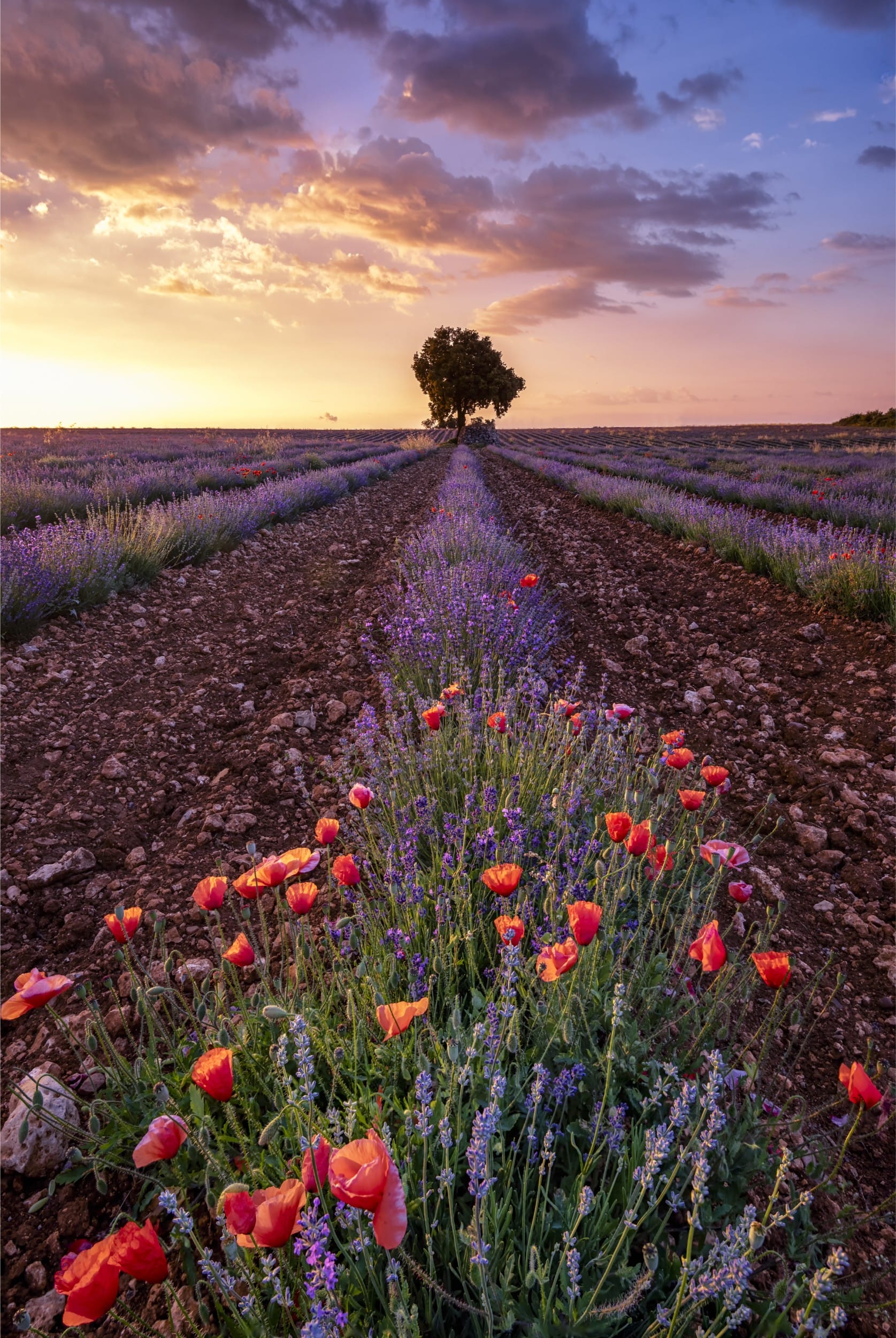
The Provençal magic is also what you discover by straying from the obvious routes. Some villages seem more discreet but offer a very medieval experience: narrow alleys, old houses, doors, towers, and that feeling of being at the end of the world. Simiane-la-Rotonde, with its rotunda and rural acropolis look, embodies an austere and magnificent Provence. Séguret, in Vaucluse, charms with its harmony and readability, like a village that has remained human-sized. Annot, in the Alpes-de-Haute-Provence, opens the door to more mountainous landscapes, where the stone takes on a different tone and the air feels sharper.
To inspire your ideas for getaways to less exposed places, this external site offers a beautiful selection: The secret villages of high Provence and Verdon.. Here you can find what you need to build a more intimate, wilder itinerary, perfect for those who love back roads and improvised stops.
How to savor a medieval village: 7 simple tips
1) Arrive early or late: the first hour of the morning and the last of the day reveal textures and calm. 2) Walk aimlessly: the most beautiful corners are not always marked. 3) Look up: narrow windows, lintels, arches, everything is read at height. 4) Look for water: fountains, washhouses, ditches tell the story of daily life. 5) Take a tour of the ramparts or high points: the defensive logic is understood through the views. 6) Embrace the stairs: the slope is part of the experience. 7) Take the time for a break: a shaded square is often the beating heart of the village.
Align the visit with the seasons: winter, spring, harvest
Medieval Provence completely changes with the seasons. In winter, the stone appears sharper, the skies deeper, and you rediscover villages without the summer hustle. Spring brings tall herbs, almond trees, and an ideal softness for walking. In autumn, the vineyards and undergrowth give a different relief to the landscapes, and the markets fill with seasonal products.
Need a room? Book directly!
If you’re considering a getaway when the region is quieter, this internal resource can inspire you: Winter holidays in Var: nature and authenticity
Bringing together heritage and art of living: wines, tables, and panoramas
Visiting a medieval village in Provence is also an opportunity to connect heritage and art of living. The nearby cellars and estates often extend the visit: you move from cool alleys to rows of sunlit vines, from the castle to the cellar, from the ramparts to the hills. A well-chosen rosé (but also an aromatic white or a characterful red, depending on the terroir) wonderfully accompanies an end of the day on a terrace, facing the landscape.
To explore this aspect without leaving the spirit of local discovery, you can consult: Rosé wines discovering the estates
And if your journey is guided by indulgence as much as by old stones, this internal content offers useful leads: Gastronomic stay: discover the flavors of the south
To go further: compare selections and create your own route.
According to your desires, you can create a Luberon loop of ochre and blonde stone, a route through the Alpilles and citadels, or an itinerary in the Verdon and high country. The ideal is to limit the number of stops per day: two villages are often enough, as the charm lies in the details and the pauses. For another perspective, this external selection offers good complementary ideas: Top 10 most beautiful villages in Provence - The Magazine.. And for a more heartwarming approach to pick from, you can also read: The most beautiful villages in Provence: favorites
Prepare your stay: sleep close to the old stones
To fully enjoy the perched villages, nothing beats a night on-site or nearby: you gain the quiet hours, those when the buses have not yet arrived and the alleys regain their breath. This also allows for dining without watching the clock, returning leisurely, and setting off the next day towards a new valley.